
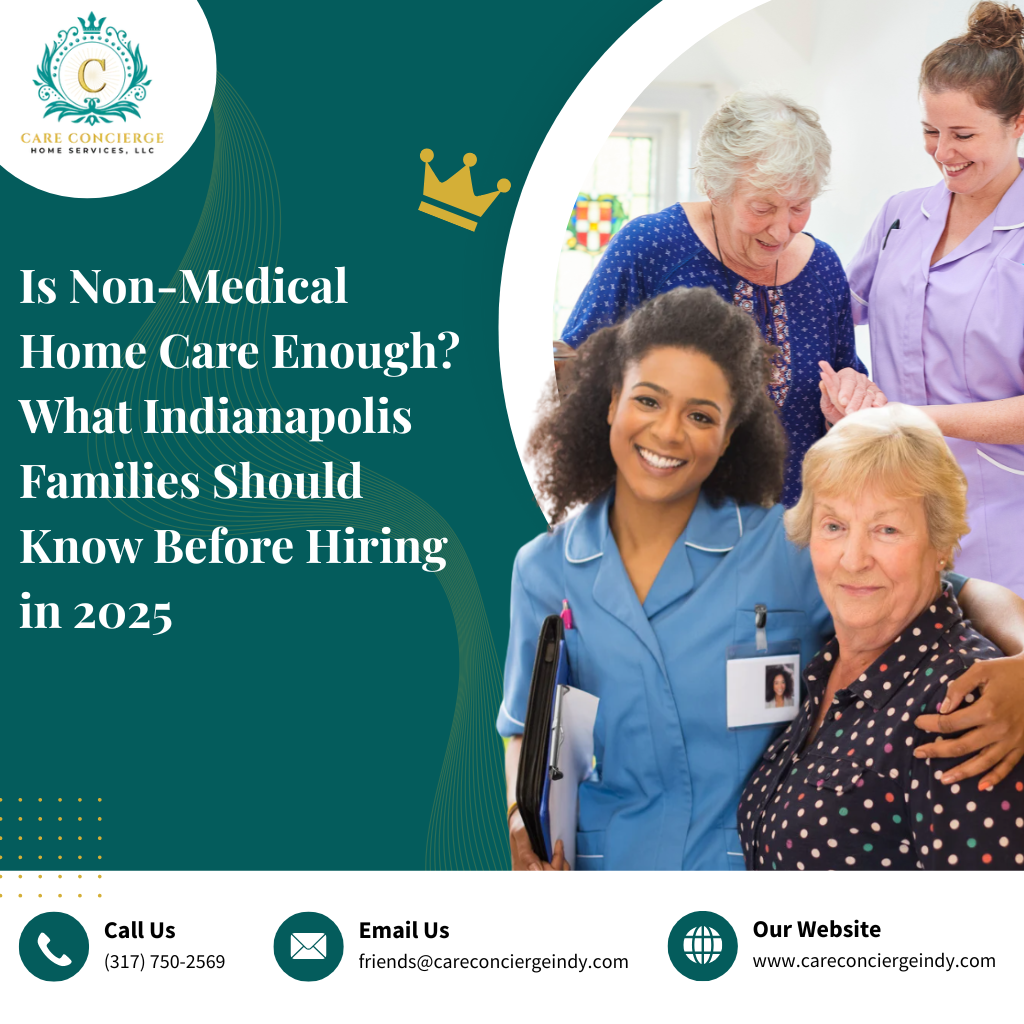
Choosing care for a loved one in Indianapolis has never been more personal or more complicated. Families want safety, dignity, and affordability, yet they often wonder: is non-medical home care enough? In 2025, the answer depends on your family’s unique needs and expectations.
Defining the Role of Non-Medical Care
Non-medical home care refers to help with daily living tasks rather than skilled nursing or medical treatments. Caregivers assist with activities like:
- Meal preparation
- Companionship for seniors
- Transportation to appointments
- Light housekeeping
- Post-surgery recovery assistance
These services do not require a medical license, yet they provide the in-home services many Indianapolis families rely on. You can learn more about such options through non-medical care companionship.
Reasons Indianapolis Families Turn to These Services
Families often turn to home care services that Indianapolis providers offer because they fit real-life challenges. Many seniors want to remain in their homes, but tasks like laundry or grocery shopping become overwhelming. With the right in-home caregiver, families gain peace of mind while seniors retain independence.
In addition, affordability plays a major role. Compared to skilled nursing, in-home support services in Indianapolis are usually less expensive and more flexible. For families balancing caregiving with jobs and children, this type of support fills critical gaps.
Recognizing the Boundaries of Non-Medical Support
While non-medical home care services are valuable, they do have limits. For example, caregivers can remind seniors to take medication, but cannot administer it. They can help after surgery, but complex wound care still requires a licensed nurse.
If your loved one has Alzheimer’s, mobility issues, or chronic conditions, you need to consider whether family caregiving support alone can manage their health needs. Sometimes a mix of senior care services and medical professionals works best.
Comparing Non-Medical and Medical Care
Families often ask about the difference between these two types of support:
Non-Medical Home Care
- Helps with daily tasks like meals, errands, and companionship
- Typically, more affordable and flexible in scheduling
- Focuses on comfort, safety, and independence
Medical or Skilled Care
- Involves licensed nurses or therapists
- Provides clinical tasks such as wound care, injections, and rehab exercises
- Usually costs more due to specialized training
Understanding these distinctions helps Indianapolis families decide whether non-medical home care is enough or if a blended plan is better.
Important Questions to Ask Before Hiring
When hiring in 2025, Indianapolis families should take time to ask:
- What tasks are included? Clarify if services cover transportation, companionship, or modified house sitting.
- How flexible are schedules? Ensure providers can adjust hours for emergencies or changing needs.
- What training do caregivers receive? Even if it is not medical, training in safety, fall prevention, or dementia care matters.
- Is postoperative support available? Families recovering from surgery should explore postoperative sick care.
- What is the backup plan? Ask how the home care provider handles last-minute cancellations.
How Families and Care Providers Share Responsibilities
Non-medical home care does not replace family; it supports them. In many cases, caregivers handle daily tasks while relatives focus on emotional connection. This combination reduces caregiver burnout and strengthens family bonds.
For new parents, extra help can make the transition smoother. Services such as postpartum support are growing in popularity across Indianapolis.
Caregiving Patterns Emerging in Indianapolis in 2025
Indianapolis families in 2025 are seeking care models that blend flexibility and personalization. Short-term contracts and hourly options allow families to test services before committing. Agencies now highlight transparency in pricing and caregiver matching.
The city’s growth has also created a wider pool of home care agencies that Indianapolis residents can choose from. Families should look at reviews, community reputation, and even official profiles like this Google business profile before making decisions.
When to Combine Non-Medical Care With Skilled Services
For many families, the answer is not choosing one or the other. Instead, combining non-medical home care with periodic skilled nursing creates balance. Seniors get daily companionship and in-home services without losing access to clinical expertise when needed.
Think of non-medical home care as the foundation of independence. It is the steady, day-to-day support that allows families to breathe, while medical professionals step in for specialized needs.
Deciding Whether This Level of Care Is Enough
Here is a practical checklist:
- Daily Activities: Can your loved one cook, clean, or bathe safely?
- Medical Needs: Do they need injections, wound care, or therapies?
- Social Health: Are they lonely or isolated?
- Family Capacity: How much time can relatives realistically give?
If most challenges fall into lifestyle and social categories, non-medical home care is likely enough. If medical issues dominate, a blended approach may be safer.
FAQs for Indianapolis Families
Q1: How much does non-medical care cost in Indianapolis?
Costs vary by hours and services, but non-medical care is usually more affordable than medical care. Families often choose hourly or part-time plans.
Q2: Can non-medical caregivers help with medication?
They can remind clients to take medication on time, but administering medication requires a licensed professional.
Q3: What types of families benefit most from non-medical care?
Families who want daily support with meals, errands, or companionship, and who prefer their loved ones to stay at home, see the greatest benefit.
A Closing Note for Indianapolis Families
Non-medical home care in Indianapolis provides dignity, comfort, and independence. For many households, it is the right level of support. For others, pairing it with medical care brings balance and safety.
Every family deserves peace of mind knowing their loved one is cared for in a way that feels both personal and reliable.
If you are considering options, visit the client website and use their services to explore trusted local support. Asking the right questions now can save stress, time, and money later, while giving your family the comfort of knowing they made the best choice.